Comparing Plastic Masterbatch and Plastic Pigments: Why Masterbatch is the Superior Choice
Comparing Plastic Masterbatch and Plastic Pigments: Why Masterbatch is the Superior Choice
In the plastic manufacturing industry, both plastic masterbatch and plastic pigments are used to add color to plastic products. While both serve the purpose of coloring plastics, they differ significantly in terms of formulation, performance, and ease of use. In this article, we’ll explore these differences and highlight why plastic color masterbatch has distinct advantages over using raw pigments.
What is Plastic Masterbatch?
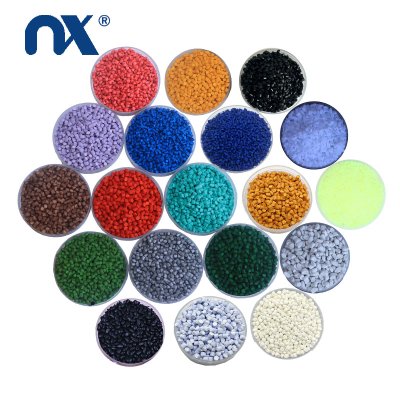
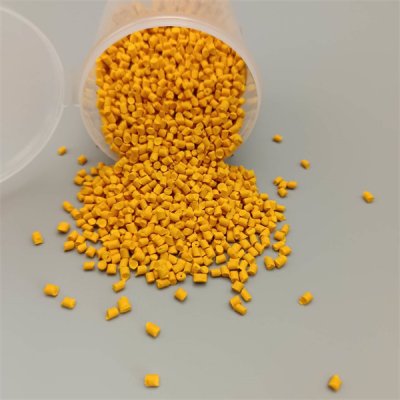
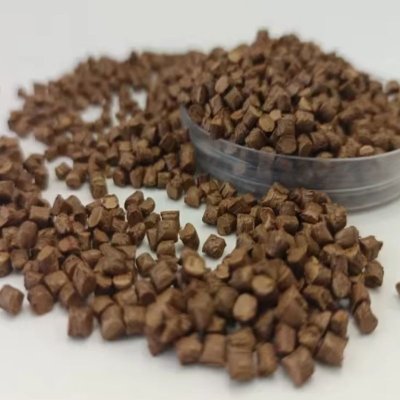
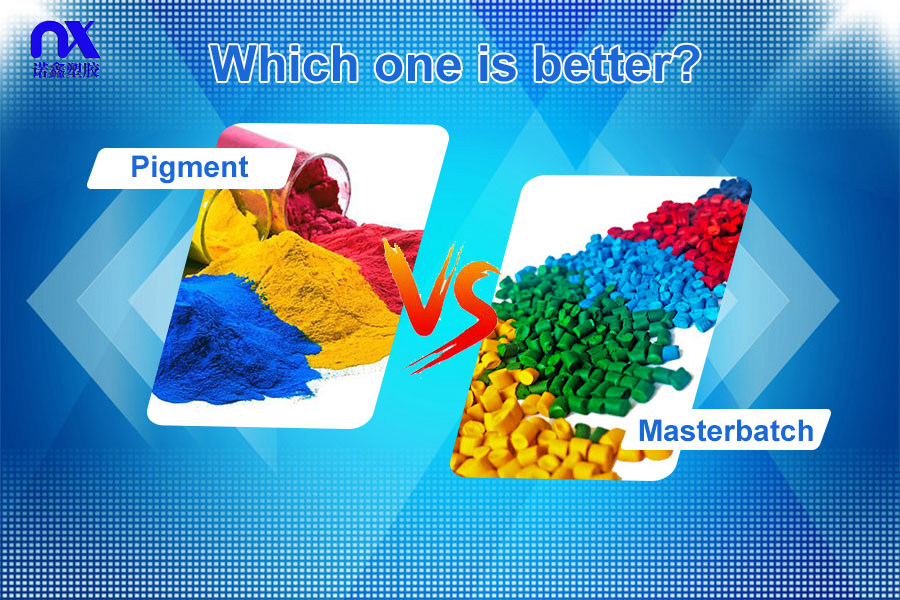
Plastic masterbatch is a concentrated mixture of pigments or additives encapsulated into a carrier resin, which is then used to color plastic during the manufacturing process. The masterbatch is added to the polymer material, providing uniform color distribution and enhancing the properties of the plastic product. Masterbatch typically comes in pellet form, making it easy to handle and incorporate into various production methods like injection molding, extrusion, and blow molding.
What are Plastic Pigments?
Plastic pigments, on the other hand, are finely ground, solid coloring materials that are mixed directly into the plastic during processing. Pigments come in powder form and require thorough mixing to achieve a uniform color throughout the plastic. While pigments are widely used for coloring, their loose powder form can present challenges in terms of dispersion and consistency.
Advantages of Plastic Color Masterbatch
1. Superior Color Uniformity
One of the primary advantages of using plastic color masterbatch over pigments is its ability to provide consistent and uniform color distribution. Since the pigments in a masterbatch are pre-dispersed within the carrier resin, the color spreads evenly throughout the plastic during the manufacturing process. This eliminates the risk of color streaks, patches, or inconsistencies, which can occur with raw pigments, especially when they are not properly mixed.
2. Easier Handling and Processing
Plastic color masterbatch comes in pellet form, which makes it much easier to handle, measure, and feed into machines compared to powder pigments. Pigments, in their powdered state, can be difficult to work with due to dust, contamination, and inconsistent measurements. Masterbatch, however, can be precisely dosed, reducing material waste and improving production efficiency. Additionally, the pellet form eliminates the health and safety concerns associated with inhaling pigment powders, making the workplace safer for operators.
3. Enhanced Product Properties
Beyond just color, plastic masterbatch can improve the mechanical properties of plastic products. Many masterbatches are formulated with additives like UV stabilizers, flame retardants, or antioxidants, which enhance the final product’s durability, weather resistance, or safety. This versatility makes masterbatch a multifunctional solution that can do more than just add color, something that raw pigments cannot offer.
4. Improved Dispersion and Consistency
When using pigments, achieving perfect dispersion can be a challenge. Poor dispersion can lead to clumping, reduced quality, and inconsistent colors. In contrast, masterbatch ensures excellent dispersion because the pigments are already embedded in a carrier resin, which facilitates easy mixing with base polymers. This results in smoother processing and higher-quality finished products.
5. Cleaner Production Process
The use of plastic color masterbatch leads to a much cleaner production environment. Unlike pigment powders that can cause dust and require frequent machine cleaning, masterbatch pellets reduce contamination and equipment wear. This leads to less downtime for cleaning and maintenance, translating into higher productivity and reduced production costs.
6. Cost Efficiency
While the initial cost of masterbatch might be higher than raw pigments, it offers better long-term cost efficiency. The precise dosing and improved color consistency reduce material wastage, production errors, and rejects, saving both time and money in the long run. Furthermore, masterbatch is highly concentrated, so only small quantities are needed to achieve vibrant, uniform colors, further optimizing material usage.
Conclusion
While both plastic masterbatch and plastic pigments are useful for adding color to plastic products, plastic color masterbatch clearly offers numerous advantages. Its superior color consistency, ease of handling, enhanced product properties, and cleaner production process make it the preferred choice for manufacturers aiming to improve product quality and operational efficiency. As the plastic industry continues to evolve, masterbatch is becoming an indispensable solution for companies seeking to optimize their production while maintaining the highest standards of product quality.