How do plastic product manufacturers who do film blowing and injection molding choose the right sodium sulfate filler masterbatch?
1. Sodium sulfate masterbatch has excellent transparency and is suitable for plastic products with high transparency requirements, such as films, packaging materials, etc.
2. Sodium sulfate masterbatch is suitable for a variety of processing technologies, including film blowing, injection molding, extrusion, etc. If used for film blowing, you need to choose products with uniform particle size distribution, good dispersibility, and higher powder mesh number. For injection molding and extrusion, you can choose products with relatively lower powder mesh number.
Nuoxin's sodium sulfate filler masterbatch has a variety of models from 1500 mesh to 6000 mesh.
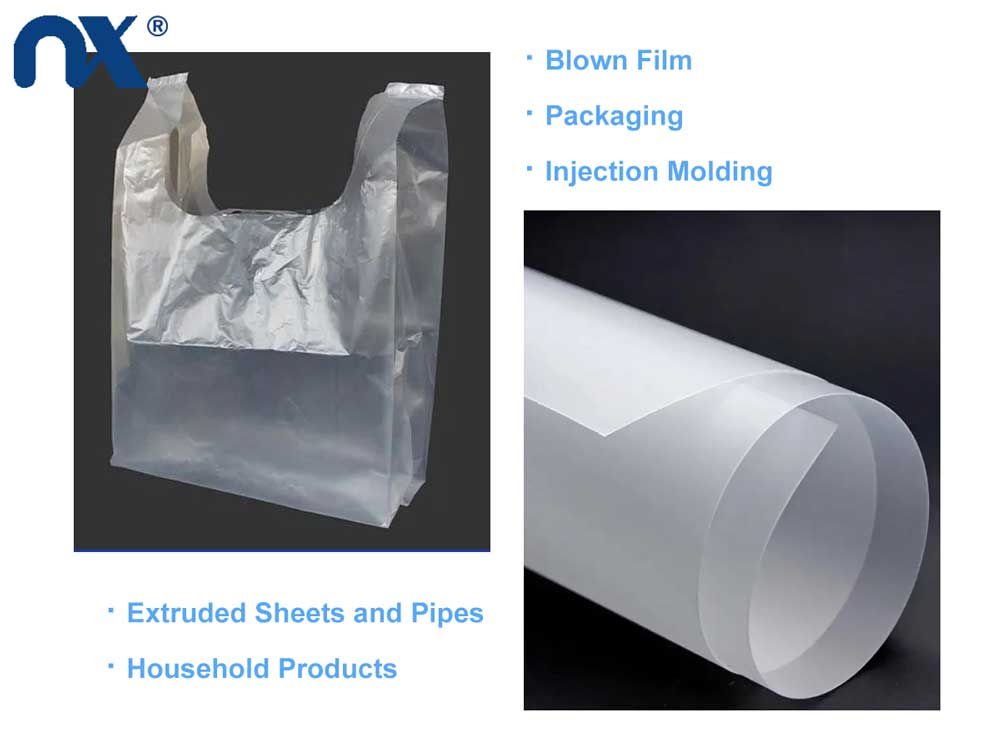
3. Compatibility: Choose sodium sulfate masterbatch with good compatibility with the target resin (such as PE, PP) to ensure uniform dispersion during processing.
4. Pay attention to product quality and stability
Particle size distribution: Sodium sulfate masterbatch with uniform particle size distribution can improve transparency and gloss and reduce product surface defects.
Whiteness and gloss: Choose masterbatch with high whiteness and good gloss to improve the appearance quality of the product.
5. Economy and cost-effectiveness
Cost-effectiveness: Sodium sulfate masterbatch is cheaper than other filler materials (such as barium sulfate) and has a larger filling area at the same weight, which can effectively reduce costs.
Addition ratio: Select the appropriate addition ratio (usually 20%-30%) according to product requirements to balance cost and performance.
6. Supplier selection
Technical support: Select suppliers who can provide technical support and customized services to meet specific process or performance requirements.
Quality certification: Priority is given to suppliers that have passed ISO certification or other international standard certification.
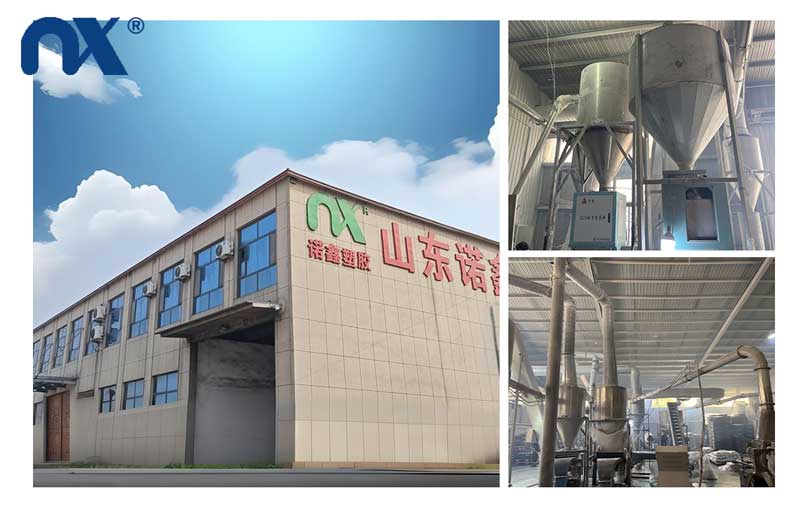
Nuoxin is a source factory with a professional technical team and sales team, which can provide high-quality services from pre-sales to after-sales.
7. Testing and verification
Sample testing: Before large-scale production, it is recommended to conduct sample testing to verify whether the performance of the masterbatch meets expectations.